All Categories
Featured
Table of Contents
Organization news and monetary news, analysis, viewpoint and data covering the six Gulf Corporation Council members Bahrain, Kuwait, Oman, Qatar, Saudi Arabia and the UAE

Financial growth throughout the Gulf Cooperation Council (GCC) is set to accelerate in 2026, with the area projected to exceed its 2025 performance in spite of muted oil profits and ongoing international unpredictabilities. According to a brand-new Oxford Economics research study rundown, GCC GDP development is expected to rise to 4.4 per cent in 2026, up from 4 per cent in 2025, showing a durable nonenergy sector, strong customer dynamics, and gradually improving oil output.
However the current projections recommend that Gulf economies are now wellpositioned to restore momentum, buoyed by strengthening domestic need and a broadly constant worldwide backdrop. The report highlights GCC consumers as a major chauffeur of the area's economic performance heading into next year. Low inflation, robust labour markets, and growing real disposable earnings are anticipated to fuel a surge in customer spending throughout the Gulf.
Credit development is also anticipated to remain raised as access to monetary services broadens. With GCC main banks anticipated to follow awaited US Federal Reserve rate cuts due to the area's dollar pegs, obtaining costs are most likely to decrease, offering households and companies even more incentive to invest and invest. While the nonoil sector continues to anchor the region's strength, the GCC's hydrocarbon outlook provides a blended image.
Why Soft Skills Are the New UAE Currency for 2026Can Market Analytics Define Middle East Corporate Growth?
This could weigh on firsthalf development, especially for economies more based on oil extraction. Oxford Economics forecasts a rebound later on in 2026, with Opec+ members anticipated to resume raising production as inventories tighten up and worldwide need enhances. Qatar, on the other hand, stands out as a regional outperformer, with substantial expansions in gas production and exports anticipated to lift its overall financial efficiency.
Saudi Arabia's 2026 budget expects a 6 per cent cut in capital expense as the kingdom aims to narrow its financial deficit by two percentage points. The report keeps in mind that these cuts might not materialise totally if countercyclical spending steps are activated to support development. By contrast, more varied economies such as the UAE and Qatar are anticipated to continue advancing their advancement agendas.
Despite shortterm risks tied to oil prices and worldwide demand, the GCC's 2026 economic outlook is specified by strength in fundamentals: resilient customers, robust nonenergy sectors, enhancing oil dynamics, and tactical financial preparation. With these elements aligning, the region is getting ready for one of its most well balanced periods of growth in current years anchored by a clear upward trajectory in GDP growth.
Comparing Traditional Systems and Future Business Frameworks
RIYADH: Gulf Cooperation Council regional economies are anticipated to remain durable in 2026, driven by strong domestic demand and a broadly steady global economy, according to an analysis. In its most current report, Oxford Economics highlighted that the real gross domestic product of the GCC area is anticipated to expand by 4.4 percent in 2026, up from the predicted 4 percent this year.
United States trade policy under President Donald Trump has actually had no significant impact on local development, and non-energy sectors have sustained their robust momentum," stated Oxford Economics. It added: "Meanwhile, oil production has gradually increased, offering a boost to the area's economies. We anticipate GCC development will rise to 4.4 percent in 2026, from 4 percent this year."In November, the GCC Statistical Center said that economic growth in the region is set to speed up to 4.3 percent by 2027, driven by expanding non-oil sectors.
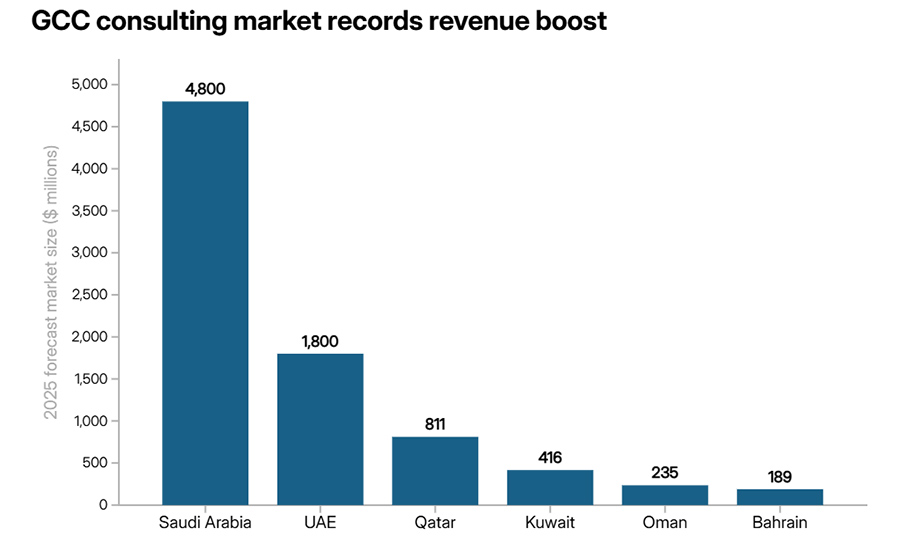
Non-oil activities represented 73.2 percent of overall GDP, up from 70.6 percent at the end of 2024, highlighting the area's ongoing development toward diversification. According to Oxford Economics, GCC customers will be standout entertainers in 2026 and are anticipated to exceed their global peers. Oxford Economics said that low inflation has actually assisted secure development in genuine non reusable income, which has actually also been supported by strong need and really low joblessness rates."We do not visualize any let-up, as governments continue to push for greater foreign direct investment in their push to diversify their economies far from oil and gas," the report added.
In December, the IMF further stated that headline inflation is expected to stay listed below 2 percent in Bahrain, Oman, and Qatar, near to 2 percent in the Kingdom and the UAE, and a little above 2 percent in Kuwait in 20252026. According to Oxford Economics, credit development is expected to stay elevated in the GCC area throughout 2026, as access to financial services is expected to grow and loaning is projected to be supported by more cuts in rate of interest."Owing to their currency pegs to the US dollar, GCC main banks are anticipated to follow the US Federal Reserve by easing monetary policy even more, which in turn will decrease debt maintenance expenses and improve disposable earnings and need," said the report.

Latest Posts
Will the GCC Sustain Industrial Growth during 2026?
How to Successfully Implement Future Strategies for 2026
Middle East Economic News and Strategic Realities